Showing posts with label Wonders of the World. Show all posts

Saturday, 24 September 2011

Christ the Redeemer

Christ the Redeemer is a statue of Jesus Christ in Rio de Janeiro, Brazil. It is considered the largest Art Deco statue in the world and the world's 5th largest statue of Jesus Christ. It was constructed between 1922 and 1931. It is 39.6 metres tall, including its 9.5 metres pedestal, and 30 metres wide. It weighs 635 tonnes and is located at the peak of the 700-metre Corcovado Mountain in the Tijuca Forest National Park overlooking the city. A symbol of Christianity, the statue has become an icon of Rio and Brazil. It is made of reinforced concrete and soapstone.

Images of Christ the Redeemer


Sunday, 18 September 2011

The Colosseum

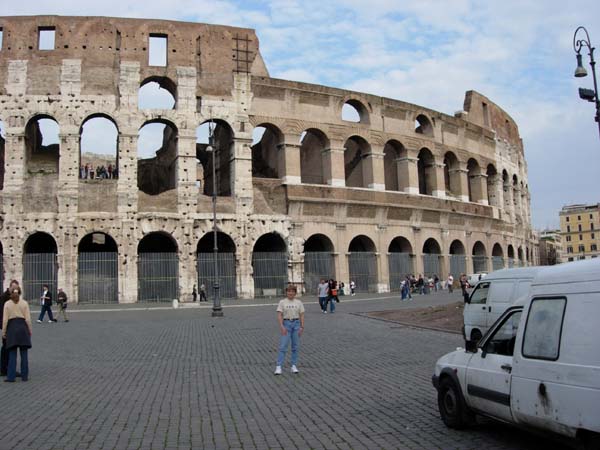
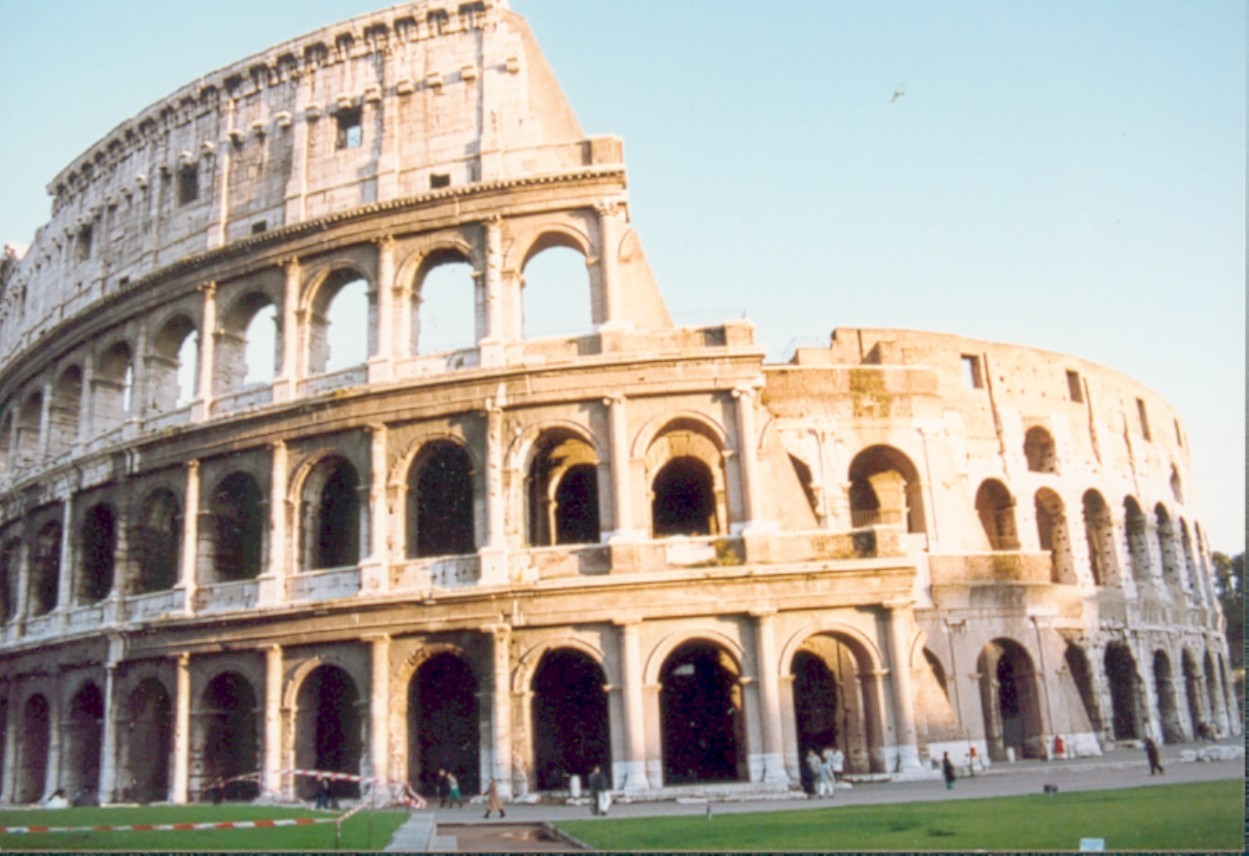
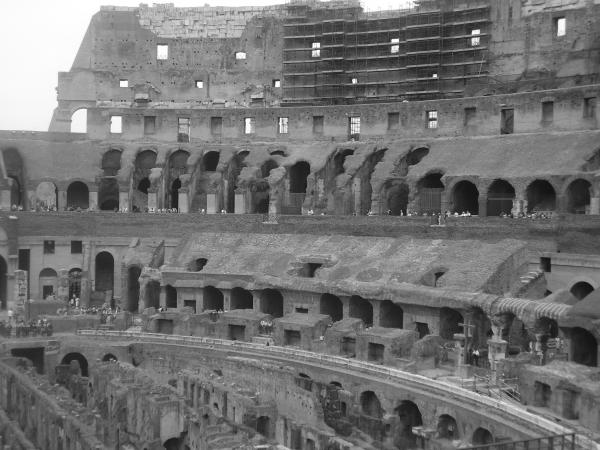
The Colosseum is an elliptical amphitheatre, the largest ever built in the Roman Empire in the centre of the city of Rome, Italy. It is considered one of the greatest works of Roman architecture and Roman engineering. Capable of seating 50,000 spectators, the Colosseum was used for gladiatorial contests and public spectacles such as mock sea battles, animal hunts, executions, re-enactments of famous battles, and dramas based on Classical mythology. The building ceased to be used for entertainment in the early medieval era. It was later reused for such purposes as housing, workshops, quarters for a religious order, a fortress, a quarry, and a Christian shrine. It is one of Rome's most popular tourist attractions and still has close connections with the Roman Catholic Church. The Colosseum is also depicted on the Italian version of the five-cent euro coin.

Image of the Colosseum

Image of the Colosseum

Image of the Colosseum


Thursday, 1 September 2011

Egyptian pyramids


The Egyptian pyramids are ancient pyramid-shaped masonry structures located in Egypt. There are 138 pyramids discovered in Egypt as of 2008. The earliest known Egyptian pyramids are found at Saqqara, northwest of Memphis. The earliest among these is the Pyramid of Djoser (constructed 2630 BCE–2611 BCE) which was built during the third dynasty. This pyramid and its surrounding complex were designed by the architect Imhotep, and are generally considered to be the world's oldest monumental structures constructed of dressed masonry. The estimate of the number of workers it took to build the pyramids have a wide range from a few thousand, twenty thousand, and up to 100,000. The most famous Egyptian pyramids are those found at Giza, on the outskirts of Cairo. Several of the Giza pyramids are counted among the largest structures ever built. The Pyramid of Khufu at Giza is the largest Egyptian pyramid. It is the only one of the Seven Wonders of the Ancient World still in existence.
Image of Pyramids of Egypt

The Great Pyramid of Giza


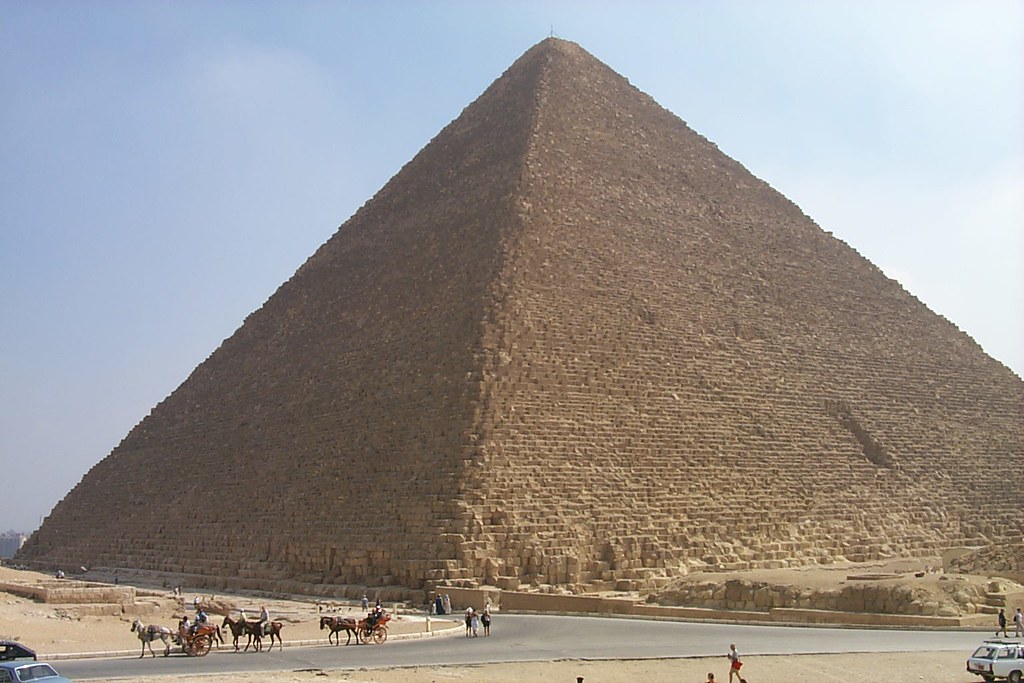
The Great Pyramid of Giza also called the Pyramid of Khufu and the Pyramid of Cheops, is the oldest and largest of the three pyramids in the Giza Necropolis bordering what is now El Giza, Egypt. It is the oldest of the Seven Wonders of the Ancient World. The Great Pyramid was the tallest man-made structure in the world for over 3,800 years, the longest period of time ever held for such a record. There are three known chambers inside the Great Pyramid. The lowest chamber is cut into the bedrock upon which the pyramid was built and was unfinished. The so-called Queen's Chamber and King's Chamber are higher up within the pyramid structure. The Great Pyramid of Giza is the only pyramid in Egypt known to contain both ascending and descending passages.

Photo of the Great Pyramid of Giza


Sunday, 28 August 2011

The Great Wall, China


The Great Wall of China is a series of stone and earthen fortifications in northern China. It is the world's longest human-made structure, stretching over approximately 6,400 km from Shanhaiguan in the east to Lop Nur in the west, along an arc that roughly delineates the southern edge of Inner Mongolia, but stretches to over 6,700 km in total. It is also the largest human-made structure ever built in terms of surface area and mass. At its peak the Ming Wall was guarded by more than one million men. It has been estimated that somewhere in the range of 2 to 3 million Chinese died as part of the centuries-long project of building the wall. The first major wall was built during the reign of the First Emperor, the main emperor of the short-lived Qin dynasty. This wall was not constructed as a single endeavor, but rather was created by the joining of several regional walls built by the Warring States. It was located much further north than the current Great Wall, and very little remains of it. A defensive wall on the northern border was built and maintained by several dynasties at different times in Chinese history. The Great Wall that can still be seen today was built during the Ming Dynasty, on a much larger scale and with longer lasting materials (solid stone used for the sides and the top of the Wall) than any wall that had been built before. The primary purpose of the wall was not to keep out people, who could scale the wall, but to insure that semi-nomadic people on the outside of the wall could not cross with their horses or return easily with stolen property.

Image of the Great Wall, China