Showing posts with label Tunnels. Show all posts

Tuesday, 20 December 2011

Zion Mount tunnel Utah

The Zion Mount Carmel highway features a 1,711 metres tunnel called Zion Mount tunnel Utah.

Image of Zion Mount Tunnel Utah

Seikan Tunnel

The Seikan Tunnel is a 53.85 kilometre railway tunnel in Japan. It has a 23.3 kilometre long portion under the seabed. Track level is about 140 metres below seabed and 240 metres below sea level. It connects Aomori Prefecture on the Japanese island of Honshu and the island of Hokkaido as part of the Kaikyo Line of Hokkaido Railway Company. Seikan is both the longest and the deepest operational rail tunnel in the world. It is also the longest undersea tunnel in the world.

Image of Seikan Tunnel

Wednesday, 7 September 2011

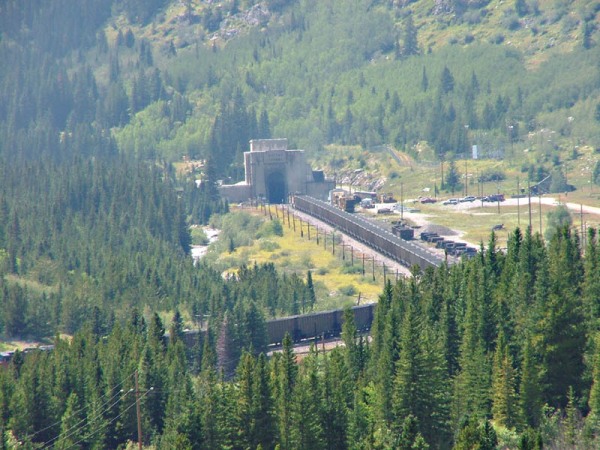
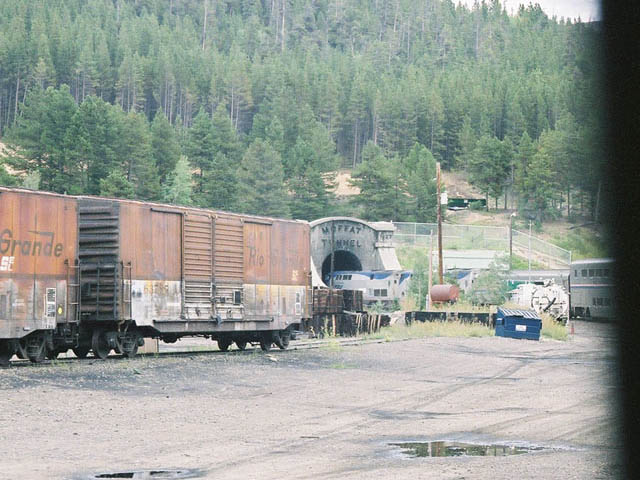
Moffat Tunnel, Colorado


The Moffat Tunnel is a railroad and water tunnel that cuts through the Continental Divide in north-central Colorado. Named after Colorado railroad pioneer David Moffat, the tunnel's first railroad traffic passed through in February 1928. The railroad tunnel is 24 feet high, 18 feet wide and 10.0 km long. The apex of the tunnel is at 9,239 feet above sea level. Railroad connections through the tunnel shortened the distance between Denver and the Pacific coast by 283 km. The first train passed through the tunnel in February 1928. The water tunnel and the railroad tunnel parallel each other, the water tunnel delivers a portion of Denver's water supply.

Image of Moffat Tunnel

Lötschberg Base Tunnel (LBT), Switzerland

The Lötschberg Base Tunnel (LBT) is a 34.57 km long railway tunnel on the BLS Lötschbergbahn's Lötschberg Line cutting through the Alps of Switzerland some 400 m below the existing Lötschberg Tunnel. It runs between Frutigen, Berne and Raron, Valais. It is currently the world's longest land tunnel and accommodates passenger and freight trains. Full scale operation began in December 2007. Travel time between Visp and Spiez is about 28 minutes (about 16 minutes in the LBT). About 110 trains per day use the LBT, and 66 use the old mountain tunnel, because of the single track. Of the 110, 30 are passenger and 80 are freight, including both intermodal freight transport plus heavy freight trains. Heavy freight trains up to a maximum weight of 4,000 tons and a maximum length of 1,500 metres have to use the LBT, as they can't use the existing mountain track.

Image of Lötschberg Base Tunnel (LBT)
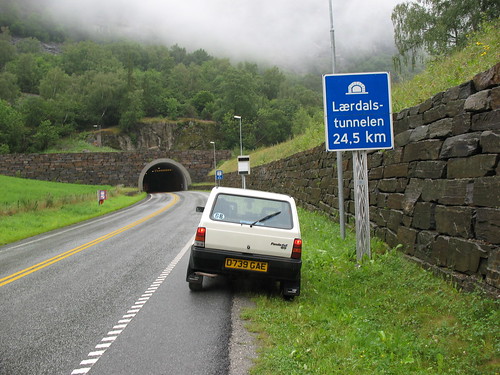
Laerdal Tunnel, Norway


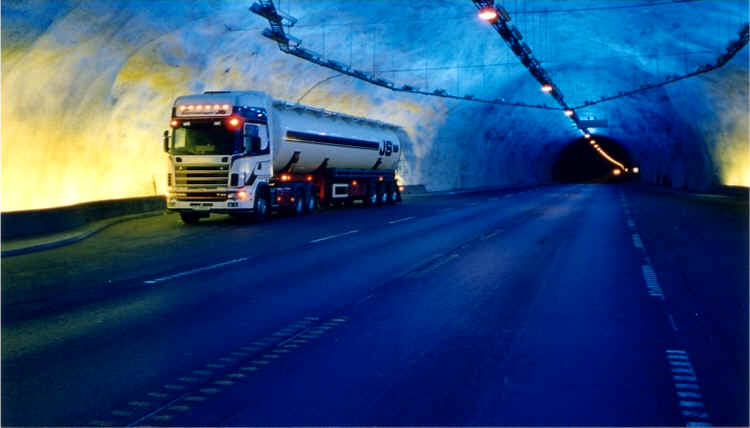
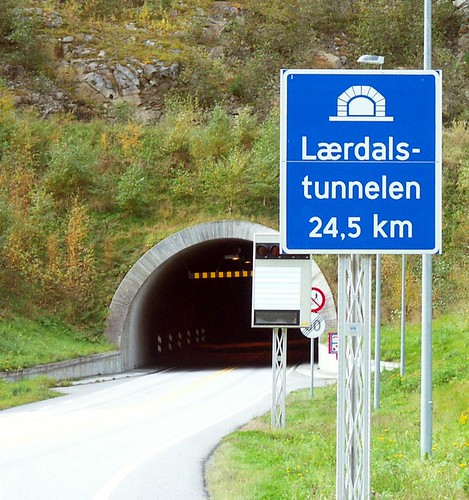
Laerdal Tunnel is the longest road tunnel in the world. It is a 24.51 kilometre long tunnel connecting Laerdal and Aurland in Sogn og Fjordane, Norway. It carries two lanes of European Route E16, the main road between Oslo and Bergen. Construction of the tunnel started in 1995, and the tunnel opened in 2000. It cost 1,082 million Norwegian krone. It is located approximately 175-200 km north-east of Bergen. This tunnel between Aurland and Laerdal represents the final link on the new main highway connecting Oslo and Bergen without ferry connections and difficult mountain crossings during the winter.

Image of Laerdal Tunnel
Inside image of Laerdal Tunnel
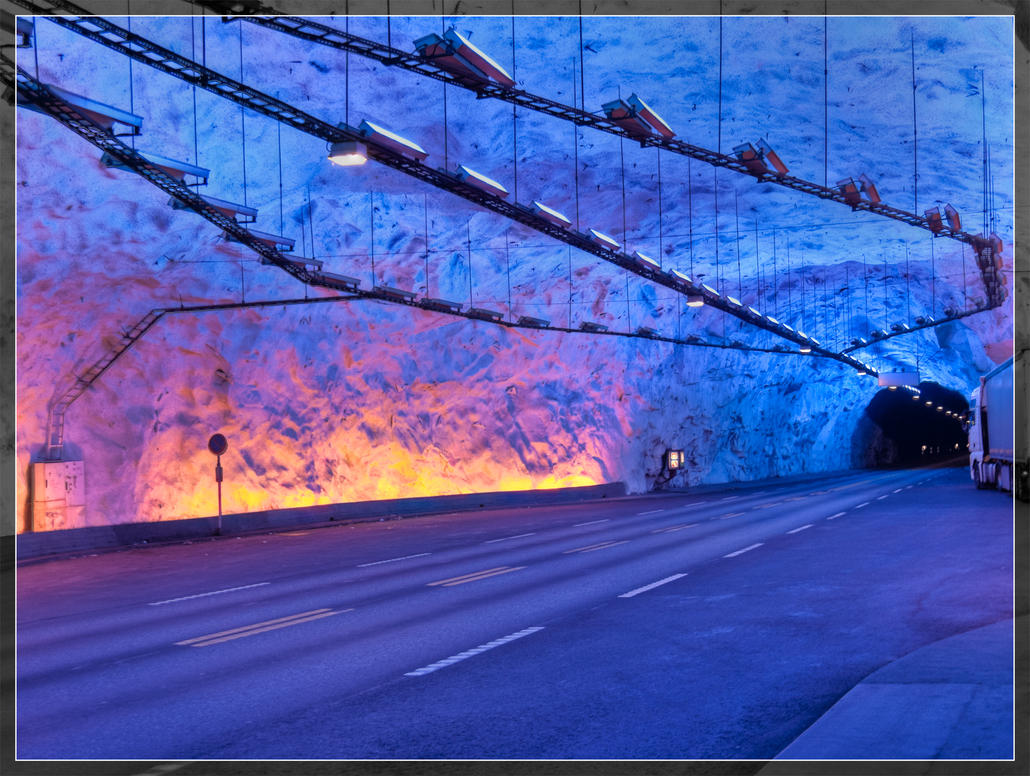
Image of Laerdal Tunnel and its sign board
Inside image of Laerdal Tunnel
Image of Laerdal Tunnel
Another inside image of Laerdal Tunnel

Sunday, 4 September 2011

Kohat Tunnel (Friendship Tunnel), Pakistan


The Kohat Tunnel is a 1.9 kilometres long road tunnel located in Khyber-Pakhtunkhwa province of Pakistan between Kohat and Peshawar on 1264 kilometer long highway N55 (also called the Indus Highway). It is also known as the Pak-Japan Friendship Tunnel as it is constructed with Japanese assistance. Construction started in 1999, and opened for traffic in June 2003. It is Pakistan’s longest road tunnel and the second longest tunnel in the country over all. The tunnel was at the centre of a military confrontation between the Pakistan Army and pro-Taliban militants in early 2008. The militants had taken control of the tunnel around 24 January, after hijacking trucks carrying supplies and ammunition for security forces in South Waziristan. On 27 January, Pakistan Army claimed to have brought the tunnel back under control of the security forces, after "fierce fighting" involving artillery, helicopter gunships and heavy machine guns during which 24 militants were reported to have been killed.
Image of Kohat Tunnel
Top view of Kohat Tunnel
Inside image of Kohat Tunnel
Trucks coming out of Kohat Tunnel
Military personnel out side the Kohat Tunnel
A truck is coming out of Kohat Tunnel

Friday, 2 September 2011

Chesapeake Bay Bridge-Tunnel

The Chesapeake Bay Bridge-Tunnel (CBBT) is a 37 km long fixed link crossing the mouth of the Chesapeake Bay and connecting the Delmarva Peninsula's Eastern Shore of Virginia with Virginia Beach and the metropolitan area of Hampton Roads, Virginia. The bridge-tunnel was opened on April 15, 1964. The bridge-tunnel originally combined 19 km of trestle, two (1.6 km) long tunnels, four artificial islands, two high-level bridges, approximately 3.2 km of causeway, and 8.9 km of approach roads, crossing the Chesapeake Bay and preserving traffic on the Thimble Shoals and Chesapeake shipping channels. The system remains one of only eight bridge-tunnel systems in the world, three of which are located in Hampton Roads, Virginia. The bridge-tunnel saves motorists 153 km and 1½ hours on a trip between Virginia Beach/Norfolk and points north and east of the Delaware Valley without going through the traffic congestion in the Baltimore–Washington Metropolitan Area. Since it opened, the Chesapeake Bay Bridge-Tunnel has been crossed by more than 100 million vehicles. It was officially named the Lucius J. Kellam Jr. Bridge-Tunnel in August 1987 after one of the civic leaders who had long worked for its development and operation. However, it continues to be best known as the Chesapeake Bay Bridge-Tunnel. Following the CBBT's opening in 1964, it was selected by the American Society of Civil Engineers (ASCE) as "One of the Seven Engineering Wonders of the Modern World" in a worldwide competition that included more than one hundred major projects.


Thursday, 1 September 2011

Khojak Tunnel, Pakistan

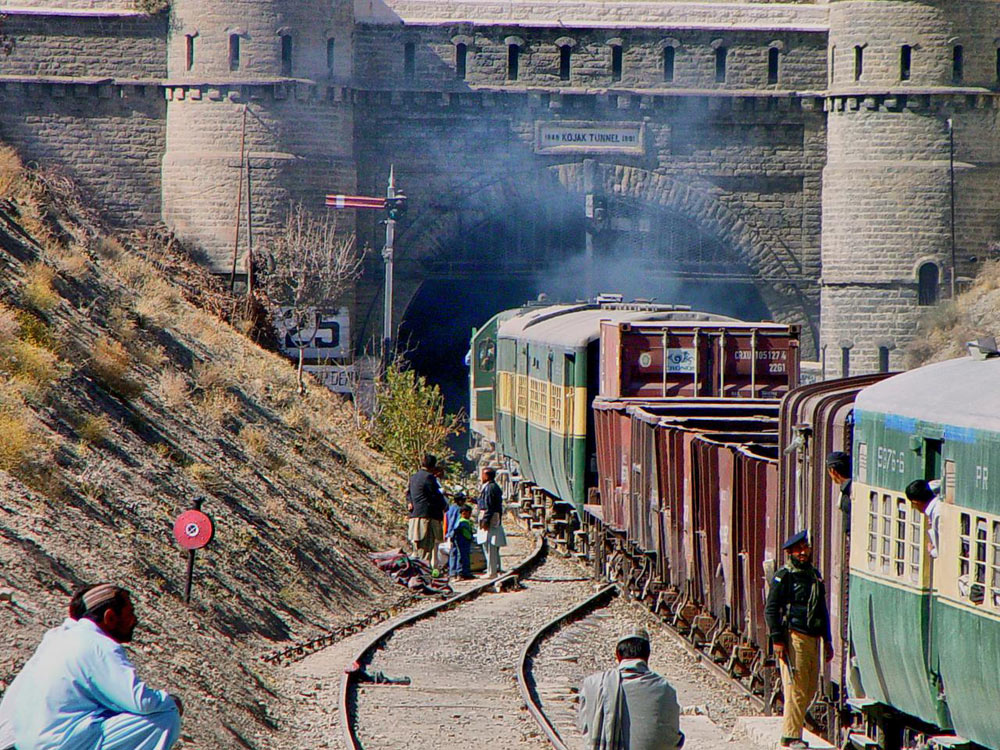
The Khojak Tunnel is a 3.91 kilometres long railway tunnel located in Killa Abdullah district of Balochistan, Pakistan. It is located 1,945 meters above sea level. The tunnel was constructed in 1891 under the Khojak Pass and remains one of the longest tunnels in South Asia, and the longest in Pakistan. It is expected to be surpassed by the 8.6 km Lowari Tunnel, currently under construction, in 2009. It was constructed in 3 years and it is so straight that they (still) use a mirror to reflect light at one end which is visible from the other. The legend says that the engineer building the tunnel committed suicide because both end of the tunnel did not meet on the day he calculated, later the reason was found that workers did not work one day and filled bogus logs. It was featured on the old Rs. 5 banknote of Pakistani currency.

Image of Khojak Tunnel

Image of Khojak Tunnel

Image of Khojak Tunnel

Image of Khojak Tunnel

Image of Khojak Tunnel

Image of Khojak Tunnel

Channel Tunnel


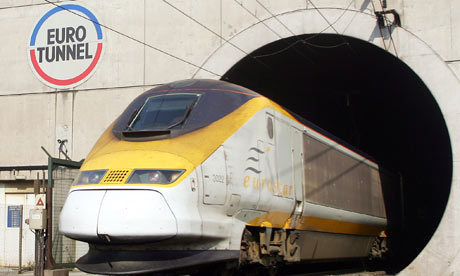
The Channel Tunnel is a 50.5-kilometre undersea rail tunnel linking Folkestone, Kent in the United Kingdom with Coquelles, Pas-de-Calais near Calais in northern France beneath the English Channel at the Strait of Dover. At its lowest point, it is 75 metres deep. At 37.9 kilometres, the Channel Tunnel possesses the longest undersea portion of any tunnel in the world, although the Seikan Tunnel in Japan is both longer overall at 53.85 kilometres, and deeper at 240 metres below sea level. The tunnel carries high-speed Eurostar passenger trains, Eurotunnel Shuttle roll-on/roll-off vehicle transport the largest in the world and international rail freight trains. In 1996 the American Society of Civil Engineers identified the tunnel as one of the Seven Wonders of the Modern World. Construction of the tunnel began in 1988 and opened in 1994. The project came in 80% over its predicted budget. Since its construction, the tunnel has faced several problems. Fires have disrupted operation of the tunnel. Illegal immigrants and asylum seekers have also attempted to use the tunnel to enter England.

Picture of Channel Tunnel
Entrance of Channel Tunnel
Image of Channel Tunnel
Train coming out of Channel Tunnel
Train in Channel Tunnel
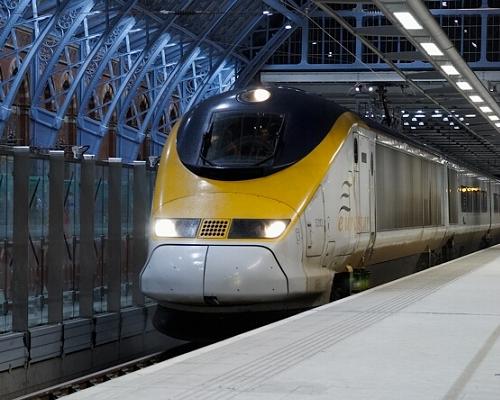
Inside Channel Tunnel
Entrance of Channel Tunnel